Pages

Showing posts with label fermented. Show all posts

Sunday, January 20, 2019

Dill and Spicy Fermented Veggies


Ingredients: 

  • mixed raw veggies (carrots, cauliflower, bell peppers, cabbage chunks or slices - whatever you have)
  • 1 onion, chopped or sliced
  • 1 jalapeno, chopped and seeded if you like mild or leave in the seeds if you like hot
  • 2 T course sea salt (I like Celtic Sea Salt for fermenting)
  • 1 T fresh dill or 1 tsp dried dill
  • 3 to 4 cloves of garlic, quartered
  • 1 tsp whole peppercorns


Directions:

1.  Fill a half gallon mason jar about half full with filtered water. Add salt, dill, peppercorns, garlic jalapeno, onion and enough raw veggies to fill the jar within one inch of the top. Add more filtered water if you need to in order to cover the vegetables.

(If you don't have a half gallon jar, just use two quart jars!)

2. Make sure your veggies stay under the liquid. Weigh them down with a weight or small jar if needed. Screw on the mason jar lid and ferment on your counter for 5 to 7 days. (Whole veggies take longer to ferment than shredded, so I like to leave mine for about 7 days) Refrigerate to stop the fermentation process and enjoy!

Experiment with different veggies till you find your favorite combination! 

Monday, February 12, 2018

Fermented Moroccan Lemons


Ingredients:
  • about 2 pounds of lemons, sliced
  • 1/4 cup course celtic sea salt or course sea salt (if you use regular salt, it may end up way to salty)
  • fresh lemon juice to cover (about 1/4-1/2 cup)
Directions:
  • Slice lemons (discard the ends or use for another purpose)
  • Layer the lemons in a mason jar (quart or half gallon size) add salt between each layer of lemons. Once the the lemons are layered, squeeze them down to create juice with a mallet, pounder or wooden spoon.
  • There should be a lot of juice from the lemons, but you may need about 1/4-1/2 cup extra lemon juice to cover the lemons completely. (You can use bottled lemon juice, but make sure it is 100% lemon juice with nothing added!)
  • I usually put a small 4 oz mason jar on top of my ferments to weight them down and keep everything covered in the salt brine. 
  • Cover with a mason jar lid, screw it on and let it sit in room temperature for 2-4 weeks. Check it periodically. The lemons are ready when they taste tangy instead of salty. 
Moroccan lemons are delicious with many dishes. Serving suggestions: Over Paella, Use to make a fresh relish with herbs and veggies, Over Curries or Moroccan dishes, With Chicken or Fish, Even delicious as a pizza topping

Wednesday, July 30, 2014

Fermented Dill Pickles

ingredients:
small pickling cucumbers

2 T course sea salt
1 T fresh dill (or more if you like)
1 t mustard seeds (optional)

2 to 4 cloves of garlic, quartered
a dash of crushed red pepper (optional)
filtered water

variation: add a few carrots, cauliflower or any other veggie


Directions:

  • Place your ingredients in a quart sized mason jar and fill within one inch of the top with filtered water. (Use a small jar or fermenting weight to weigh down the cucumbers inside the large jar. You want the cucumbers fully covered with liquid.)  
  • Cover the jar with the mason jar lid, screw the lid on and ferment in room temperature on your counter for 5 to 7 days. (Whole veggies take longer to ferment than shredded, so I like to leave mine for about 7 days) 
  • Refrigerate to stop the fermentation process and enjoy! You know they are ready when they taste tangy and fermented instead of salty.

Tuesday, July 15, 2014

Fermented Garlic Scapes

"You can pickle that."

Ingredients: 

A bunch of fresh garlic scapes
2 T sea salt 
1 T fresh dill (optional)
filtered water to fill the jar

Directions:Place your ingredients in a quart sized mason jar and fill within one inch of the top with filtered water.  Cover and ferment on your counter for 5 to 7 days. (Whole veggies take longer to ferment than shredded, so I like to leave mine for about 7 days)
Refrigerate to stop the fermentation process and enjoy!

Thursday, March 13, 2014

Fermented Dilly Carrots

ingredients:
5 to 7 carrots, peeled and cut into sticks
2 T sea salt
1 T fresh dill (or 1 tsp dried dill weed)
3 to 4 cloves of garlic, quartered
1 tsp black peppercorns

filtered water

Directions:Place your ingredients in a quart sized mason jar and fill within one inch of the top with filtered water. (Make sure your veggies stay under the liquid. Weigh them down with a weight or small jar if needed.) Screw on the mason jar lid and ferment on your counter for 3 to 5 days. (Whole veggies take longer to ferment than shredded, so sometimes it may take longer than 5 days, just depends on the temperature of your kitchen) 

Refrigerate to stop the fermentation process and enjoy!

*You can use this same basic recipe with any veggies
*Add spicy peppers or red pepper flakes if you like things spicy

Beet and Apple Relish

Ingredients:
3 large large apples (about 1 ½ pounds, cored but not peeled)
3 large beets (about 1 ½ pounds, peeled)
2 star anise pods (optional)
1 tbsp 
whole cloves
2 tbsp unrefined sea salt


Instructions: 

Shred apples and beets by hand, or in a food processor.

Toss the shredded apples and beets together until well-combined and mixed together.

Add the star anise and whole cloves to the apples and beets, and continue to toss until the spices are evenly distributed among the shredded fruit and vegetables.

Add about one cup of mixture to a blender with 1 cup water and 2 tbsp sea salt. Puree.  Then pour over apple beet mixture.

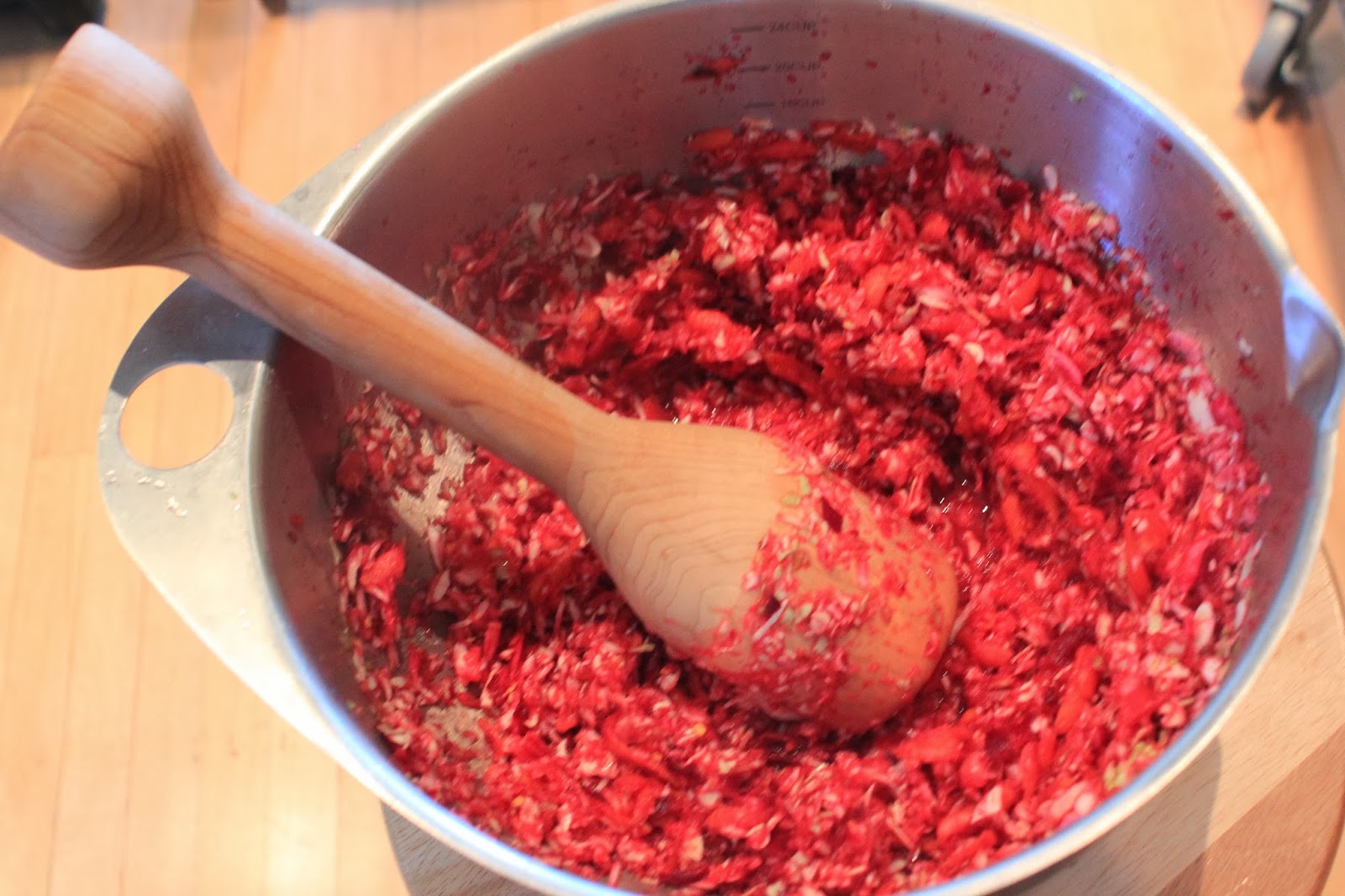
Mash with a veggie pounder, wooden spoon or mallet to encourage the fruit and vegetables to release their juices, creating a brine to encourage the proliferation of beneficial bacteria.

Ferment in a mason jar (with the lid on)  for a minimum of three to four days, or longer, depending on the temperature in your kitchen and your desired taste.

After your apple and beetroot relish has sufficiently cultured, gently pick out the star anise pods and whole cloves.

Place the apple and beetroot relish into a blender or food processor and process until smooth. (optional)


Enjoy!

Monday, February 17, 2014

Cortido with Kale

supplies:
large metal bowl or pot
veggie stomper (potato masher, meat pounder or something else to pound your veggies with)
2 - wide-mouth quart jars with lids (or) 1 - half gallon jar with a lid
canning jar funnel makes for less mess!

If you look closely, you can see the small 4 oz. jar inside the wide-mouth jar.

ingredients:

  • 1/2 one green cabbage, cored and shredded
  • 2 medium carrots, grated
  • 1 or 2 handfuls of fresh kale, chopped
  • 1/2 - 1 tsp red pepper flakes
  • 1 tsp dried Oregano
  • 2 T salt
  • 1 cup water
  • *I used the middle size grating option on my food processor.


Directions:

  • Mix grated veggies together in a large metal bowl or even a large pot would work. Don't use glass or ceramic or you may crack your bowl. Add red pepper flakes and Oregano


  • In a blender, combine water, salt and about 1 cup of the veggie mixture. Puree till smooth.


  • Mix liquid and veggies together. Stomp with a vegetable stomper for about 5 minutes. (use a potato masher, meat pounder or other kitchen gadget if you do not have a stomper) Divide mixture between 2 - quart mason jars or use a larger half gallon jar. Press veggies down with veggie stomper and make sure the veggies are covered with liquid. I often put a small (4oz) mason jar inside a wide-mouth mason jar to weigh the veggies down so that they are always covered with liquid. (glass baby food jars are the perfect size too)


  • Put the lids on your jars. Allow jars to sit in room temperature for 3-5 days. Bubbles should be forming and the mixture should not taste salty when it is fermented. Once fermented to your liking, move to cold storage (basement cellar) or refrigerator.

Fermented Cabbage, Carrot and Beet

supplies:
large metal bowl or pot
veggie stomper (potato masher, meat pounder or something else to pound your veggies with)
2 - wide-mouth quart jars with lids (or) 1 - half gallon jar with a lid
canning jar funnel makes for less mess!

ingredients:
1/2 one green cabbage, cored and shredded
2 medium carrots, grated
2 or 3 beets, peeled and grated
1/2 - 1 tsp red pepper flakes
2 T salt
1 cup water
*I used the middle size grating option on my food processor.
Grated Veggies

Pounding the Veggies

Pushing down the veggies so that they are covered in liquid

Directions:
Mix grated veggies together in a large metal bowl or even a large pot would work. Don't use glass or ceramic or you may crack your bowl. Add red pepper flakes.

In a blender, combine water, salt and about 1 cup of the veggie mixture. Puree till smooth.

Mix liquid and veggies together. Stomp with a vegetable stomper for about 5 minutes. (use a potato masher, meat pounder or other kitchen gadget if you do not have a stomper) Divide mixture between 2 - quart mason jars or use a larger half gallon jar. Press veggies down with veggie stomper and make sure the veggies are covered with liquid. I often put a small (4oz) mason jar inside a wide-mouth mason jar to weigh the veggies down so that they are always covered with liquid. (glass baby food jars are the perfect size too)

Put the lids on your jars. Allow jars to sit in room temperature for 3-5 days. Bubbles should be forming and the mixture should not taste salty when it is fermented. Once fermented to your liking, move to cold storage (basement cellar) or refrigerator.

Saturday, May 11, 2013

Fermented and Fresh Salsa


Ingredients:

1 jar of fermented tomatillos
1/2 medium red onion
1/2 cup fresh cilantro, chopped
1/2 green bell pepper
1/2 - 1 jalapeno or serrano pepper

Directions:
Chop fresh ingredients or through them together in your food processor.
Mix together fresh and fermented ingredients.

*This last time, I strained the juice off of the fermented tomatillos, then I pureed two or three fresh tomatillos and mixed that into the salsa. Still experimenting with texture and flavor!

Enjoy this salsa as you would any other salsa.

Fermented Tomatillos


Ingredients:
6-8 tomatillos (enough to fill a mason jar 3/4 full when chopped)
1 cup filtered water
1 T salt


Directions:
Mash one tomatillo with a vegetable stomper/pounder or potato masher.
Dice the remaining tomatillos and put in a clean mason jar. Dissolve salt into water and stir together with mashed tomatillo. Pour the liquid over the diced tomatillos. Add more filtered water if needed to cover vegetables. Allow to ferment in a sealed jar for 3 to 5 days. I started with 4 days and liked the results.

*Length of fermenting depends on the temperature of the room. You may need longer in a cool room. If your jar is not bubbly or your veggies still taste salty then you need more time.

Use your tomatillos to make Fresh and Fermented Salsa or just eat them plain. They are delicious and an excellent probiotic!

Friday, May 10, 2013

Cortido - Latin American Kraut


Latin American Sauerkraut (Cortido) – adapted slightly from Nourishing Traditions
Makes 2 quarts
1 large cabbage, cored and shredded (keep some chunkier if you like a bigger texture)
1 cup carrots, grated or thinly sliced
2 medium onions, quartered lengthwise and thinly sliced
1/4 cup fresh oregano (or about 1 tsp dried oregano) 
½ - 1 t red pepper flakes (more if you really like spice)
2 T salt
1 cup water

Directions:
Mix grated veggies together in a large metal bowl or even a large pot would work. Don't use glass or ceramic or you may crack your bowl. Add red pepper flakes and Oregano

In a blender, combine water, salt and about 1 cup of the veggie mixture. Puree till smooth.

Mix liquid and veggies together. Stomp with a vegetable stomper for about 5 minutes. (use a potato masher, meat pounder or other kitchen gadget if you do not have a stomper) Divide mixture between 2 - quart mason jars or use a larger half gallon jar. Press veggies down with veggie stomper and make sure the veggies are covered with liquid. I often put a small (4oz) mason jar inside a wide-mouth mason jar to weigh the veggies down so that they are always covered with liquid. (glass baby food jars are the perfect size too)

Put the lids on your jars. Allow jars to sit in room temperature for 3-5 days. Bubbles should be forming and the mixture should not taste salty when it is fermented. Once fermented to your liking, move to cold storage (basement cellar) or refrigerator.
*The length of fermenting will vary depending on the temperature of your room. Experiment and figure out what you like. The kraut should not really taste salty, but more sour "like vinegar." Also you should see bubbles in the jar and when you open the jar there will be a release of pressure like when you open a carbonated drink.
*If you are getting into vegetable fermenting/culturing this is a nice quality "pounder."

Wednesday, April 3, 2013

Kimchi - Korean Sauerkraut

Adapted From: Nourishing Traditions


Makes 2 quarts

Ingredients:1 head Napa cabbage, cored and shredded (must use Napa for best results)
1 bunch green onions, chopped
(sometimes I used red onion instead)
1 cup carrots, grated
½ cup daikon radish, grated (optional)
1 handful of kale, chopped (optional)
1 T freshly grated ginger
3 cloves garlic, peeled and minced
1 t dried red pepper flakes (more or less depending on spice preference)
2 T salt
1 cup filtered water
Directions:
Mix veggies together in a large metal bowl or even a large pot would work. Don't use glass or ceramic or you may crack your bowl. Add ginger, garlic and red pepper flakes. 

In a blender, combine water, salt and about 1 cup of the veggie mixture. Puree till smooth.

Mix liquid and veggies together. Stomp with a vegetable stomper for about 5 minutes. (use a potato masher, meat pounder or other kitchen gadget if you do not have a stomper) Divide mixture between 2 - quart mason jars or use a larger half gallon jar. Press veggies down with veggie stomper and make sure the veggies are covered with liquid. I often put a small (4oz) mason jar inside a wide-mouth mason jar to weigh the veggies down so that they are always covered with liquid. (glass baby food jars are the perfect size too)

Put the lids on your jars. Allow jars to sit in room temperature for 3-5 days. Bubbles should be forming and the mixture should not taste salty when it is fermented. Once fermented to your liking, move to cold storage (basement cellar) or refrigerator.